
Hands on Learning – Educational Games for Kids
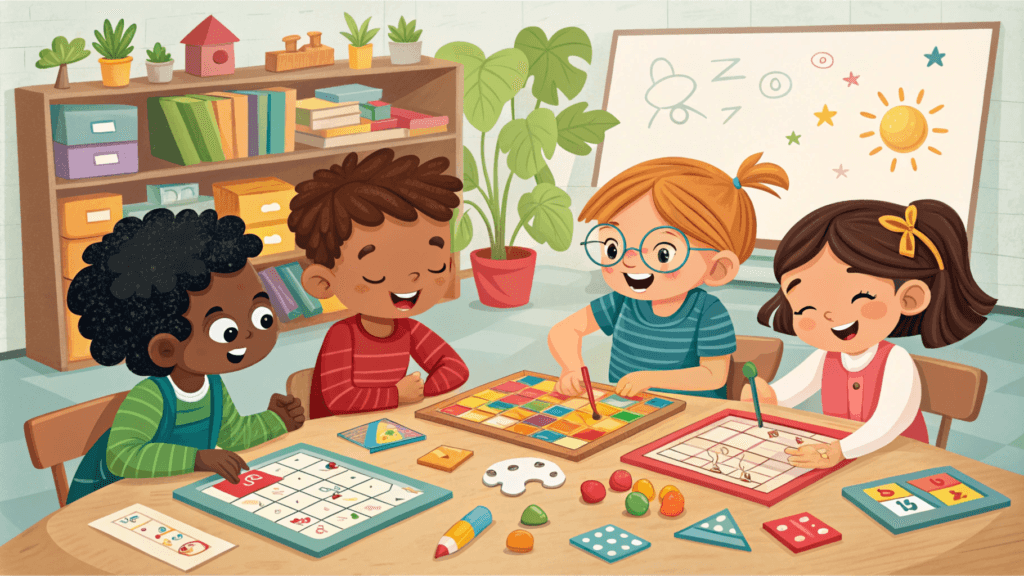
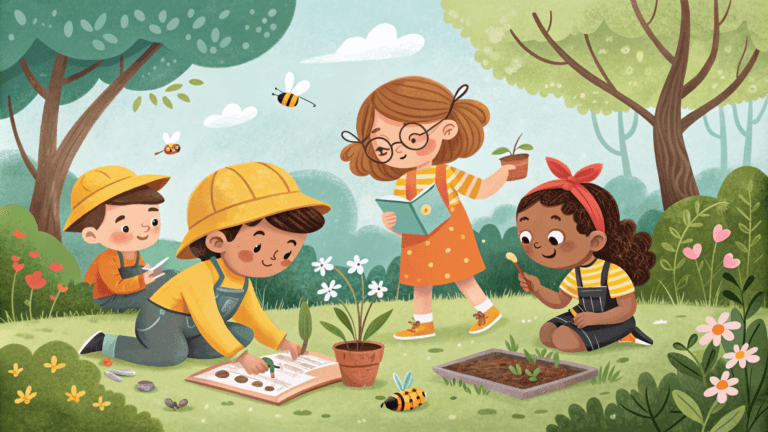
In today’s digital age, it’s easy for children to become glued to screens. However, the benefits of hands-on learning games can’t be overlooked. Physical games not only encourage kids to move, think, and interact with their surroundings but also build cognitive skills in a fun, engaging way. These types of games turn learning into a dynamic experience that goes beyond textbooks and screens.
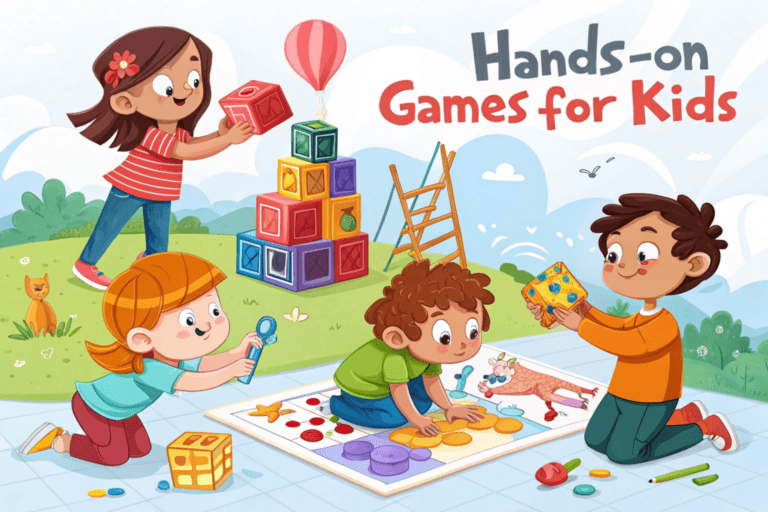
This article dives into a selection of physical educational games that can be played at home to boost children’s math, reading, writing, and science skills. Perfect for family game nights or solo play, these games encourage kids to get up, think critically, and develop important academic and life skills while having a blast.
If your child loves exploring beyond play, consider our summer reading list for elementary students to match games with great books.
Educational Games for Kids
Math Games
1. Candy Shop Arrays
- Materials Needed: Small objects like candies, coins, or buttons; paper and pencil.
- Description: Transform your living room into a “candy shop” where kids practice multiplication through arranging objects in arrays.
- How to Play:
- Give your child a math problem, like 3 x 4.
- Have them arrange 12 candies in 3 rows of 4.
- For each correct array, they earn a “candy coin” (or a token).
- Educational Benefits: Helps children visualize multiplication concepts, understand grouping, and develop spatial reasoning.
2. Addition Bowling
- Materials Needed: 10 empty plastic bottles, a small ball, and sticky notes.
- Description: A classic bowling game with a math twist to enhance addition skills.
- How to Play:
- Label each bottle with numbers (1-10).
- Arrange the bottles in a triangle and let kids roll a ball to knock them over.
- After each turn, kids must add up the numbers on the bottles they knocked down.
- Educational Benefits: Improves addition skills, enhances hand-eye coordination, and encourages physical activity.
3. Coordinate Plane Treasure Hunt
- Materials Needed: Large sheet of paper, markers, and small toys or objects to “hide.”
- Description: A game where kids use coordinates to find hidden treasures on a hand-drawn map.
- How to Play:
- Draw a coordinate plane on the sheet of paper (label the x and y axes).
- Place small toys or objects at various coordinates.
- Give children coordinate points to locate the treasures.
- Educational Benefits: Teaches graphing and spatial reasoning while developing problem-solving skills.
Reading and Writing Games
1. Homophone Toss
- Materials Needed: Bean bags, index cards, and markers.
- Description: A fun game where kids identify and match homophones while practicing their aim.
- How to Play:
- Write homophones on pairs of index cards (e.g., “there” and “their”).
- Place the cards on the floor face-up.
- Call out one word, and kids must throw a bean bag onto its matching homophone.
- Educational Benefits: Helps with vocabulary, spelling, and understanding word meanings in context.
2. Synonym Scavenger Hunt
- Materials Needed: Index cards, sticky notes, or paper slips.
- Description: An indoor treasure hunt where kids search for hidden words and match them with their synonyms.
- How to Play:
- Write various words on index cards and hide them around the house.
- Provide children with a list of synonyms they need to find (e.g., search for “happy” to find “joyful”).
- For each correct match, they earn points toward a prize.
- Educational Benefits: Expands vocabulary, promotes active learning, and develops critical thinking.
3. Sentence Builder Relay
- Materials Needed: Strips of paper, markers, and a timer.
- Description: A fast-paced game where kids race to build complete sentences using given words.
- How to Play:
- Write different words on strips of paper (nouns, verbs, adjectives, etc.).
- Scatter the strips across a room.
- Set a timer and challenge kids to form as many complete sentences as they can before time runs out.
- Educational Benefits: Enhances grammar skills, boosts creativity, and reinforces sentence structure.
Science Games
1. Fraction Pizza Party
- Materials Needed: Construction paper, scissors, and markers.
- Description: Kids create their own “pizza” and practice fractions by dividing it into slices.
- How to Play:
- Have kids draw and cut out a large circle to represent a pizza.
- Ask them to divide their pizza into different fractions (e.g., halves, thirds, quarters).
- Give them scenarios like “someone wants 1/4 of the pizza” and have them cut and serve the slices.
- Educational Benefits: Builds an understanding of fractions and division in a hands-on way.
2. Plant Life Cycle Relay
- Materials Needed: Flashcards with stages of a plant’s life cycle, such as seed, sprout, plant, flower.
- Description: An active relay game that teaches kids about the stages of plant growth.
- How to Play:
- Create a set of flashcards representing each stage of a plant’s life cycle.
- Place them in one area of the room.
- Kids race to pick up the cards and arrange them in the correct order.
- Educational Benefits: Teaches biology concepts, improves memory, and encourages physical activity.
3. Magnetic Field Maze
- Materials Needed: Magnets, paper clips, and a large sheet of paper.
- Description: A hands-on game where kids navigate a maze using magnets.
- How to Play:
- Draw a maze on the sheet of paper.
- Attach a paperclip to a small toy or token and place it at the starting point.
- Children must guide the token through the maze using a magnet from underneath the paper.
- Educational Benefits: Introduces basic physics concepts like magnetism, encourages problem-solving, and develops fine motor skills.
General Educational Games
1. DIY Jeopardy Game
- Materials Needed: Poster board, sticky notes, and markers.
- Description: A customizable trivia game that can cover various subjects like math, reading, or science.
- How to Play:
- Set up a Jeopardy board using sticky notes with questions and point values.
- Create categories based on topics your child is learning.
- Play with family members, with each person choosing a category and answering questions for points.
- Educational Benefits: Encourages teamwork, critical thinking, and reinforces knowledge in a fun, competitive format.
2. Memory Match with a Twist
- Materials Needed: Index cards, markers.
- Description: A classic memory matching game, but with a focus on educational content like vocabulary words, math equations, or historical facts.
- How to Play:
- Write pairs of related items on index cards (e.g., word-definition, math equation-answer).
- Shuffle the cards and place them face down.
- Players take turns flipping two cards, trying to find matching pairs.
- Educational Benefits: Enhances memory, improves concentration, and reinforces subject matter.
3. Build a Story with Dice
- Materials Needed: Blank dice, stickers, or markers.
- Description: Kids roll dice to generate prompts for storytelling, helping them practice creative writing.
- How to Play:
- Assign each side of a die a different prompt (characters, settings, plot twists).
- Kids roll the dice and use the prompts to create a short story.
- For added fun, let them act out their stories!
- Educational Benefits: Encourages creativity, enhances storytelling, and improves oral and written communication skills.
Final Words
These hands-on games prove that learning doesn’t have to be confined to screens or textbooks. By incorporating physical, educational games into your child’s routine, you can foster a love of learning, encourage creativity, and strengthen important academic skills in a fun and interactive way.
Do you have a favorite hands-on educational game you play with your kids? Share it in the comments below! And if you’re looking for more ways to make learning at home engaging and screen-free, try these games for your next family game night. Let’s inspire children to learn through play!
Want to reinforce personal growth alongside play? Discover 7 strategies for personal development that kids can explore through everyday activities.

2 Comments