
Engaging Hands-On Games to Boost Learning and Creativity
Introduction
In an era dominated by screens, ensuring kids experience the joys and benefits of hands-on play is more critical than ever. Hands-on games for kids aren’t just about fun—they’re powerful tools for learning, development, and bonding. These activities encourage creativity, sharpen problem-solving skills, foster teamwork, and provide a healthy outlet for energy. Whether you’re a parent, teacher, or caregiver, having a repertoire of hands-on games at your disposal can transform any day into an opportunity for growth and joy.
In this article, we’ll explore a treasure trove of hands-on games for kids, spanning outdoor adventures, indoor excitement, and creative pursuits. You’ll discover actionable tips for implementation, the developmental benefits of these activities, and strategies to make playtime a cornerstone of learning. Let’s dive into this engaging world of interactive play!
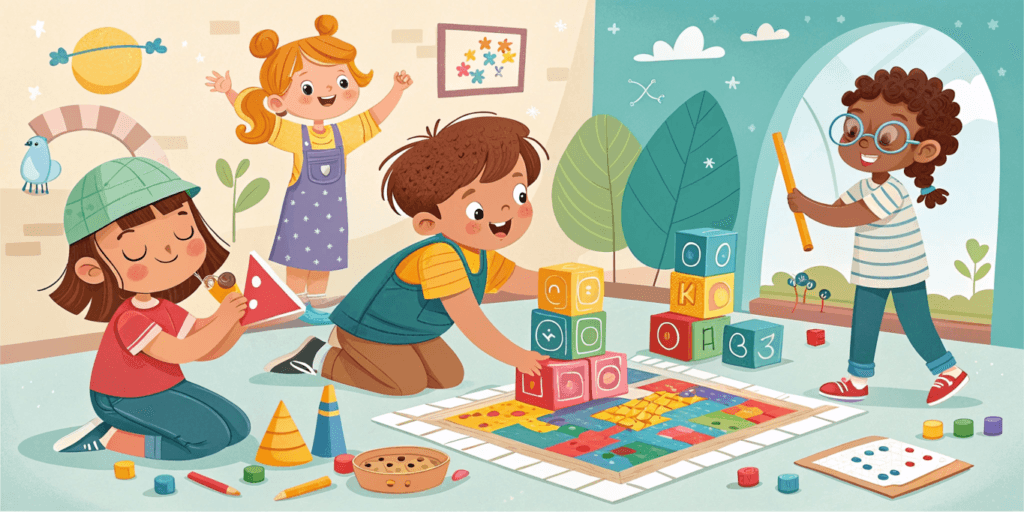
Types of Hands-On Games for Kids
Outdoor Games
Outdoor games are perfect for burning energy while developing critical physical and social skills. Here are some timeless and innovative ideas:
1. Tag
Why it’s great: Simple, energetic, and endlessly customizable, tag builds agility and coordination.
How to play: In this classic game, one player is designated as “It.” Their goal is to chase and tag the other players by touching them lightly. When someone is tagged, they either become “It” or are frozen in place until another player unfreezes them (in variations like Freeze Tag).
Variations:
- Shadow Tag: Players avoid having their shadow stepped on.
- Zombie Tag: Add a fun twist where “It” moves like a zombie, and tagged players join the zombie horde.
Tips: Use safe, open spaces, and establish boundaries to avoid accidents.
- Benefits: Promotes running, dodging, and strategic movement, making it a great cardiovascular workout.
2. Capture the Flag
Why it’s great: This strategic team game fosters collaboration and critical thinking.
How to play: Divide players into two teams, each with a designated territory and a flag (or similar item) placed within their base. Teams strategize to sneak into the opponent’s territory, retrieve their flag, and return it to their own base without getting tagged. Tagged players can be sent to “jail” or a holding area until freed by a teammate.
Variations: Use glow sticks for nighttime play or adapt the game to a smaller space by using smaller “flags” like handkerchiefs.
Tips: Encourage kids to plan strategies before starting, such as assigning roles like defenders and attackers.
Benefits: Encourages teamwork, strategy development, and friendly competition.
3. Obstacle Course
Why it’s great: Combines fun with physical challenges tailored to any age group.
How to set it up: Create a series of physical challenges tailored to the space and age group. Obstacles might include crawling under tables, hopping through hula hoops, balancing on a beam, or jumping over cones. Add timers for a competitive edge.
Variations:
- Nature-Themed: Use logs, rocks, and natural elements in a backyard.
- Relay Race Style: Divide players into teams and have them complete the course in turns.
Benefits: Enhances motor skills, balance, and overall physical fitness.
Indoor Games
When outdoor play isn’t an option, indoor games provide equally engaging alternatives.
1. Balloon Tennis
- Why it’s great: A low-cost game that improves hand-eye coordination.
- How to play: Make paddles by attaching paper plates to sticks or spatulas, and use a balloon as the “tennis ball.” Create a “net” using string or a line of pillows on the floor. Players hit the balloon back and forth, aiming to prevent it from touching the ground on their side.
- Variations:
- Team Play: Involve more players and create small teams.
- Trick Shots: Challenge players to use creative moves, like hitting the balloon behind their backs.
- Tips: Use multiple balloons to keep younger kids engaged or to accommodate large groups.
- Benefits: Develops reflexes and coordination, and it’s safe for indoor play.
2. Indoor Scavenger Hunt
- Why it’s great: A game that sparks curiosity and critical thinking.
- How to play: Prepare a list of items or clues hidden around the house. Clues might include riddles or simple hints like “Look where we keep the spoons.” For older kids, increase complexity by adding timed challenges or multi-step puzzles.
- Variations:
- Theme-Based: Use themes like “pirates” or “nature” to guide the items.
- Treasure Hunt: Hide a grand prize, such as a small toy or treat, at the end of the hunt.
- Tips: Ensure items are age-appropriate and placed in safe, easily accessible locations.
- Benefits: Boosts problem-solving skills and keeps kids active indoors.
3. Pictionary
- Why it’s great: Combines creativity with a touch of competition.
- How to play: Write a mix of easy and challenging words or phrases on slips of paper. One player picks a slip, then draws clues (without using letters or numbers) while their team guesses. Set a timer for added excitement.
- Variations:
- Reverse Pictionary: The guesser draws based on a description from their teammate.
- Charade Hybrid: Players act out the word if their drawing isn’t guessed in time.
- Tips: Encourage creativity and remind players to use symbols or abstract representations if stuck.
- Benefits: Encourages artistic expression and quick thinking.
Creative Games
Creative games go beyond traditional play, offering opportunities for self-expression and innovative thinking.
1. Crafting Challenges
- Why it’s great: Turns everyday materials into art and functional objects.
- How to play: Provide kids with various recycled materials such as cardboard, bottle caps, or old magazines. Assign a theme like “space inventions” or “animal habitats,” and let their imaginations run wild. They can work individually or in groups to create their masterpieces.
- Variations:
- Timed Craft: Set a time limit to add excitement.
- Show and Tell: Have kids present their creations and explain their functionality.
- Tips: Lay down newspaper to keep the area clean and encourage using non-toxic adhesives.
- Benefits: Enhances problem-solving, dexterity, and eco-awareness.
2. Storytelling Circle
- Why it’s great: A collective way to build imaginative narratives.
- How to play: Gather participants in a circle. One child begins with a sentence like, “Once upon a time, there was a magical dragon.” Each child adds a sentence, building on the story. For younger kids, provide prompts or story starters to guide them.
- Variations:
- Prop-Based: Use objects (a toy or hat) to inspire story elements.
- Theme Specific: Assign themes such as “adventures in space” or “lost in the jungle.”
- Tips: Record or write down the stories for kids to revisit later.
- Benefits: Develops communication, listening skills, and creativity.
3. DIY Science Experiments
- Why it’s great: Fun meets education, introducing kids to scientific concepts.
- How to play: Conduct simple, safe science experiments like a baking soda and vinegar volcano. To make one, mold clay or dough into a volcano shape, place a small container inside, and add baking soda. Pour in vinegar mixed with food coloring for an eruption effect.
- Variations:
- Color Mixing: Experiment with primary colors to create new ones.
- Floating or Sinking: Gather objects and guess whether they’ll float or sink before testing in water.
- Tips: Provide safety gear like goggles and explain the science behind the experiment for added learning.
- Benefits: Sparks curiosity and lays the groundwork for scientific literacy.
Benefits of Hands-On Games for Kids
Cognitive Development
- Enhances problem-solving skills through challenges and puzzles.
- Encourages critical thinking by requiring kids to adapt strategies during play.
- Stimulates creativity through activities like crafting and storytelling.
Physical Development
- Improves motor skills and hand-eye coordination through active games.
- Promotes overall fitness by encouraging movement and agility.
- Supports healthy habits by integrating exercise into daily routines.
Social Skills
- Fosters teamwork and collaboration during group games.
- Teaches communication and negotiation, key for conflict resolution.
- Builds empathy and understanding as kids learn to navigate different roles.
Tips for Implementing Hands-On Games
Setting Up the Environment
- Safety first: Clear the area of hazards for physical games.
- Be prepared: Gather materials and test activities beforehand to avoid interruptions.
- Atmosphere matters: Create a welcoming space with bright colors, fun music, or a theme.
Adapting Games for Different Age Groups
- Younger kids: Simplify rules and focus on sensory play.
- Older kids: Add complexity through time limits, team-based strategies, or layered objectives.
- Inclusivity: Offer alternatives or modifications for kids with different abilities.
Encouraging Participation
- Involve them: Let kids pick or adapt games to their interests.
- Celebrate effort: Use rewards like stickers or extra playtime for motivation.
- Be a role model: Join the games to show enthusiasm and lead by example.
Wrap Up!
Hands-on games for kids are more than a source of entertainment—they’re a gateway to holistic growth for children. From boosting cognitive and physical development to nurturing social skills, these activities empower kids to learn through play. Whether outdoors, indoors, or through creative projects, there’s no limit to what kids can achieve when they engage in hands-on activities.
So why wait? Gather your materials, round up the kids, and dive into the exciting world of interactive play. Your creativity and involvement can make these moments unforgettable and impactful.
Explore more fun and educational ideas by subscribing to Kids Arch! Share your favorite hands-on games in the comments below or tag us on social media to showcase your creations. Together, let’s make learning through play a joyful experience!
Resources
- Game-Based Learning in Early Childhood Education
This systematic review highlights the effectiveness of game-based learning on cognitive, social, and emotional development in children. It emphasizes how engaging children through games can enhance motivation and learning outcomes. - Hands-On Learning for Kids: Fun Ideas to Boost Skills and Engagement
This blog post discusses various hands-on learning activities that promote engagement and cognitive development. It provides practical examples of activities that can be implemented at home or in educational settings. - 20 Best Hands-On Activities for Kids in 2024
This article lists numerous hands-on activities designed to be both fun and educational, focusing on concepts like gravity and spatial awareness through creative projects. It serves as a practical guide for parents and educators looking to incorporate hands-on learning into their routines. - The 5 Best Resources for Hands-On Learning in Early Childhood
This resource outlines the benefits of hands-on learning, supported by research on experiential learning theory, which emphasizes learning through direct experience and active participation. - 10 Important Research Findings on Games in Education
This article summarizes key research findings that demonstrate the positive impact of games on educational outcomes, including motivation and engagement, which are crucial for effective hands-on learning experiences.

One Comment