
Mindfulness and Mental Health for Children
Table of Contents
- Introduction
- Understanding Mindfulness for Kids
- Connection Between Mindfulness and Mental Health
- Mental Health Awareness for Children
- Mindfulness Activities and Exercises for Kids
- Mindfulness for Children with Anxiety
- Incorporating Mindfulness in Schools
- Practical Parenting Tips for Children’s Mental Health
- Conclusion
- FAQ
Introduction
In today’s fast-paced, technology-driven world, children are increasingly exposed to stress, anxiety, and mental health challenges. With the pressure of academics, social interactions, and digital distractions, it’s no wonder that mental health resources for kids are becoming a priority for parents and educators alike. Mindfulness is emerging as a powerful tool to help children navigate these challenges, providing a simple yet effective way to promote emotional well-being, reduce stress, and enhance focus.
In this guide, we’ll explore the benefits of mindfulness for kids, share simple exercises that families can incorporate into their daily routines, and highlight how mindfulness can positively impact child mental health support.
Understanding Mindfulness for Kids
What is Mindfulness?
Mindfulness is the practice of being fully present and aware in the moment, without judgment. It involves paying attention to thoughts, emotions, and physical sensations, which can help children develop a deeper sense of self-awareness and control over their reactions. When adapted for kids, mindfulness can be fun, engaging, and highly beneficial for their mental well-being.
What is Mindfulness in Child Development?
In child development, mindfulness focuses on nurturing a child’s ability to stay present, manage emotions, and foster empathy. Mindfulness practices teach children to recognize their feelings and thoughts, which can enhance their emotional intelligence and social skills. Introducing mindfulness early on helps children build a foundation for better coping mechanisms throughout life.
How Does Mindfulness Help Children?
Mindfulness helps children by:
- Improving focus and concentration.
- Enhancing emotional regulation.
- Reducing anxiety and stress levels.
- Encouraging self-compassion and empathy.
- Building resilience to handle life’s challenges.
Connection Between Mindfulness and Mental Health
How is Mindfulness Connected to Mental Health?
Mindfulness practices have a direct impact on mental health by promoting calmness, reducing negative thoughts, and helping children develop a positive outlook. By practicing mindfulness regularly, children can better manage stress and anxiety, which are common challenges in today’s world.
Mindfulness and Emotional Regulation in Children
Children often struggle to process and manage their emotions, leading to outbursts or anxiety. Mindfulness teaches children how to recognize their emotions, understand triggers, and respond thoughtfully instead of reacting impulsively.
Developing Resilience Through Mindfulness in Children
Mindfulness can also help build resilience in children. By being present in the moment, kids learn to approach challenges with curiosity rather than fear. This mindset helps them develop the emotional strength needed to navigate life’s ups and downs.
Mental Health Awareness for Children
Raising mental health awareness for children is essential in today’s world. Children face pressures from academics, social media, and peer groups, which can negatively impact their well-being. It’s crucial to recognize the signs of stress or anxiety early and provide child mental health support through mindful practices and accessible resources.
Parents and educators can promote good mental health in children by:
- Encouraging open conversations about feelings.
- Creating safe spaces where children feel heard.
- Integrating mindfulness exercises and techniques to manage stress.
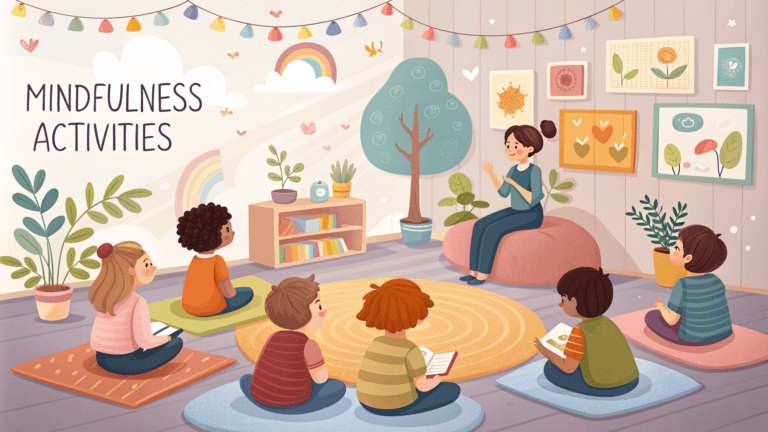
Mindfulness Activities and Exercises for Kids
How to Teach Mindfulness to Children
Teaching mindfulness to children requires patience and creativity. Start by introducing simple mindfulness activities that capture their interest, such as games or stories that promote awareness.
Mindfulness Techniques for Children
Here are some techniques that can help children develop mindfulness:
- Mindful Listening: Ask children to close their eyes and listen to the sounds around them for a minute. This exercise improves their focus and attention to detail.
- Body Scan: Guide children to focus on each part of their body, noticing any sensations or tension. This can help them relax and become more aware of their physical state.
Mindfulness Exercises for Kids: Simple Practices to Try
1. Mindful Breathing Exercises for Kids
- Balloon Breathing: Ask children to imagine they are inflating a balloon by taking deep breaths in and out. This can calm their minds and help them focus.
- Five-Finger Breathing: Children trace the outline of their hand with one finger, inhaling as they go up a finger and exhaling as they go down.
2. Mindfulness Meditation for Children
- Simple guided meditations can help children relax and focus. Use visualization techniques, such as imagining a peaceful place or a favorite animal, to make meditation enjoyable.
3. Mindfulness Games for Kids
- The 5 Senses Game: Ask children to identify something they can see, hear, touch, smell, and taste. This exercise brings them into the present moment.
- Gratitude Jar: Encourage children to write down something they are thankful for each day and place it in a jar.
Mindfulness for Children with Anxiety
For children with anxiety, mindfulness offers a way to manage symptoms by focusing on the present rather than worrying about the future. Mindful breathing, grounding exercises, and positive affirmations can help children calm their racing thoughts and reduce anxiety.
Incorporating Mindfulness in Schools
Mindfulness Curriculum for Schools
Schools are increasingly adopting mindfulness programs to support mental health and well-being. A mindfulness curriculum can include activities like breathing exercises, mindful eating, and reflective journaling.
Mindfulness in Early Childhood Education
Starting mindfulness practices in preschool can have long-lasting benefits. Simple activities like mindful coloring, Storytime with a focus on feelings, and gentle yoga can help young children develop focus and patience.
Practical Parenting Tips for Children’s Mental Health
Parents play a crucial role in supporting their child’s mental health. Here are some practical tips:
- Model Mindfulness: Children learn by watching their parents. Practice mindfulness yourself to set a positive example.
- Create a Mindful Environment: Dedicate time for family mindfulness exercises, such as deep breathing before bedtime or a tech-free evening.
- Encourage Outdoor Activities: Nature walks and outdoor play are great ways to practice mindfulness while also benefiting physical health.
Mindfulness and Mental Health for Children
Mindfulness is a powerful tool to support children’s mental health, helping them navigate the pressures of daily life with a calmer mind and a more positive attitude. By incorporating mindfulness exercises into your child’s routine, you can create a more peaceful home environment and set them up for a lifetime of emotional well-being.
FAQ
Resources
- The Power and Benefits of Mindfulness Meditation| Child Mind Institute
- Effectiveness of mindfulness in improving mental health symptoms of children and adolescents: a meta‐analysis
- State of the research: Physical and mental health benefits of mindfulness-based interventions for children and adolescents
2 Comments